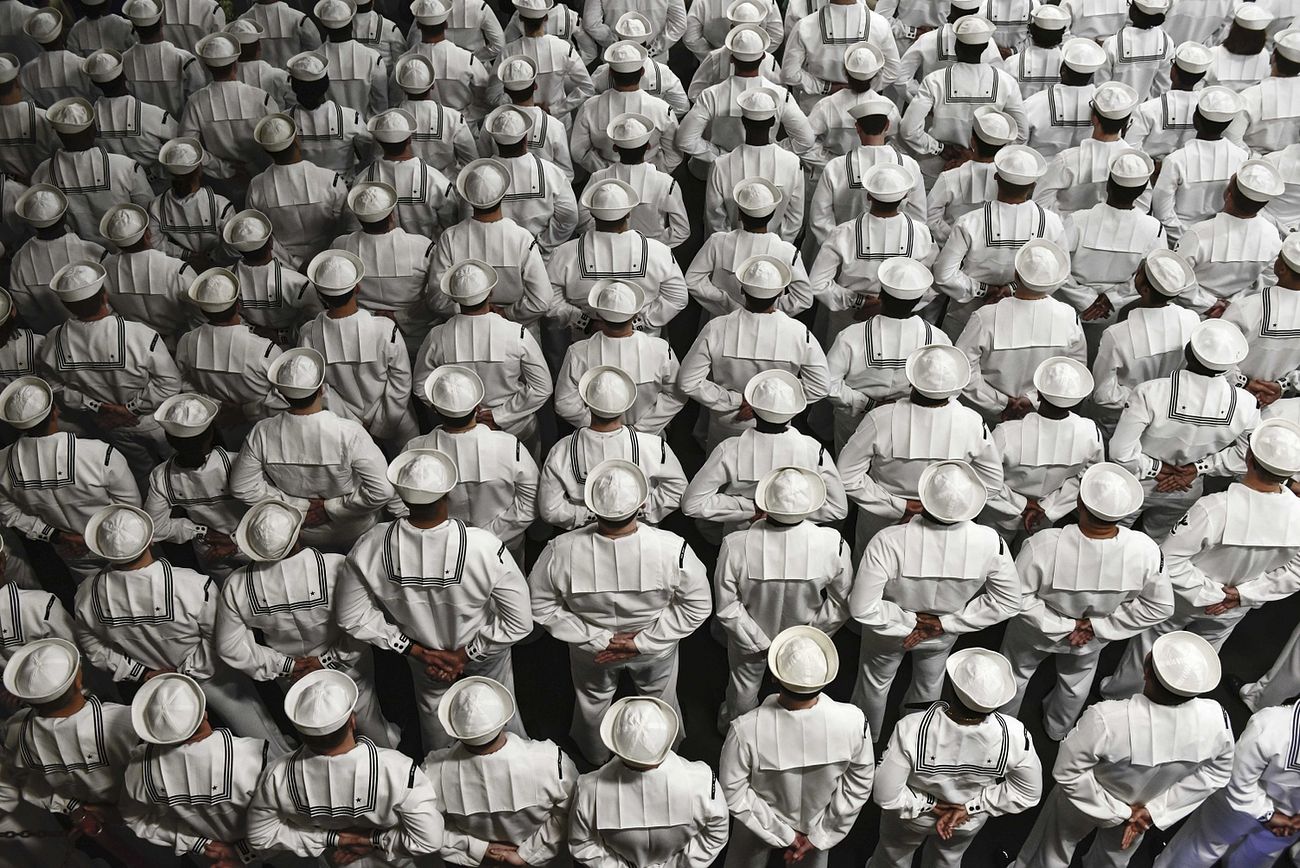
The video below lays out some of the difficulties we have had with finding good data for the Base Project. Specifically, it explores the problems related to using data published by the DoD on personnel. I hope this will help show how difficult it can be to build something like the Base Project from the ground up when even the data that should be the most reliable is unpredictable. Please enjoy!
-Ryan Hinshaw
Northeastern University
Transcript
Ryan Hinshaw: Hello, my name is Ryan Hinshaw. I’m a third-year History and Religious Studies major at Northeastern University, and I’m one of the research assistants who have been working on the Base Project. In this blog, I wanted to share a little bit about how we go about looking for information, good information that we can use in the Base Project and some of the issues that we’ve been running into. Specifically, I wanted to look at trying to find personnel data and the difficulty that we’ve been having trying to find good personnel data.
So why would we want personnel data when it comes to the Base Project? It’s important to know where all of our service members are stationed, but from an environmental impact specifically, the size of a base and the number of people there are going to impact the local environment pretty heavily. You’ve probably read about various military bases where the drinking water has been contaminated and that obviously has an environmental impact. But even in a base that has perfect water quality, very little air pollution, very little sound pollution, very little light pollution—which I think probably doesn’t exist—but even in a place like that, just by having people there, it’s going to impact the local environment. The Army found that in an arid environment, each soldier would need 12.86 gallons of water per day. So if you have a base with thousands of soldiers, you’re looking at tens of thousands of gallons of water that that base would need per day. If they’re using local water, that’s going to have a huge impact on the local environment, especially in a place that may not have a large water reserve to begin with.
So when looking at personnel data, the best thing that we can come up with is what the DOD publishes itself, which comes from the DMDC—that’s the Defense Manpower Data Center under the Secretary of Defense. And they publish a number of different things every year, and quarterly, they publish military and civilian personnel by service and agency, and then specifically by state and country. They publish this quarterly. They used to publish it every year. RH: Now they publish it quarterly. And this is the most useful for us because it goes through where people are stationed, not just in which service they are. So if we look at an example…we can look at an example from 2008. This is from the end of 2008. This is when they were publishing them every year. And this shows every state and then by country. Now this is useful, but only to a certain extent. We look at Texas. Texas had 101,000 active duty members of the military in the end of September 2008. Texas is a very large state, and so it’s obvious there were a lot of members in the military there—about 10% of the active duty members in the United States. But we don’t know where they were stationed. We don’t know which bases they were on and which ones were larger than others. But if you have a place that only has one military base, then this list can be useful.
For example, the country of Djibouti only has one military base, and it’s Camp Lemonnier. It’s an active Navy base. It is our only base, only permanent base, on the continent of Africa. And so in 2008 there were 337 soldiers, 463 sailors, 73 Marines, 158 airmen, and nobody from the Coast Guard. So just over a thousand active duty military members in Djibouti—must have been at Camp Lemonnier; it’s the only spot. About 800 members of the reserve, a few civilians, so a total of just over 1,800 members of the military that were in Djibouti at the time. This makes a lot of sense. The DOD had just expanded Camp Lemonnier, trying to stake a claim in Africa, and so this makes a good amount of sense for how many people would have been stationed there. Unfortunately, as we moved forward and tried to find more up to date information, for example from the last year, the numbers just didn’t make sense. So if we look at from December of 2023, the end of the year, and we look at Djibouti, it said that there were two soldiers, two sailors, 334 Marines, two airmen, nobody from the Space Force and one member of the Coast Guard for 341 active duty members of the military. Nobody in the reserve, one navy civilian, so a total of 342. This does not make sense at all. Camp Lemonnier has not shrunk all that much. It’s still the only active base in Africa, and if we just look on the Camp Lemonnier website, it shows that there are more than two active sailors. If you take the Commanding Officer, the Executive Officer, and the Command Master Chief, that’s already three active sailors when the file only said that there were two. And if we look at this, this is a video of various members of Camp Lemonnier shouting out who they wanted for the Super Bowl this past year, just in this frame, we’re looking at 10 active sailors, which is five times the number that the file said. So the question becomes, do we actually know how far off they are? It says that there are 342. Is that 342 that they’re saying and there are actually a thousand? There are actually 5,000? There are actually 10,000? How do we know how far off it is? So CBS ran a piece about Camp Lemonnier back in 2022, and it mentioned how many people were stationed now.
CBS video: This may be a routine training exercise, but the special ops air combat men need to stay fighting fit. Their job is to rescue troops trapped behind enemy lines stationed in high risk locations like Camp Lemonnier in the East African nation of Djibouti. In the air, on land, or at sea, the 4,500 strong troops at this military base…[End of clip]
RH: So in 2022, at least, there were 4,500 people stationed. If we go to what the DOD said at that point in time, that’d be quarter one of 2022, they said there were three soldiers, two sailors, 267 Marines, two airmen, and no one from the Coast Guard. So a total, when you include the civilians, of 281 people. If you take those numbers, that means that the DOD only reported about 6% of the people that were stationed at Camp Lemonnier and by extension, the people that were stationed in Djibouti. That means that they missed over 90% of people who were there. These numbers can’t be trusted. I don’t think we should extrapolate for every other country on this list, but it’s impossible to determine unless you go case by case, which ones are actually correct. And so it makes it difficult because this was the best source that we had, and at the same time, we know that it’s untrustworthy.

Leave a Reply